









Ancient Byzantine-Era City Unearthed in Egypt’s Western Desert Reveals Remarkable Urban Life
Archaeologists in Egypt have uncovered a remarkably well-preserved Byzantine-era city in the western desert, shedding new light on urban development, architecture, and daily life during the fourth century when the region was part of the Byzantine Empire.
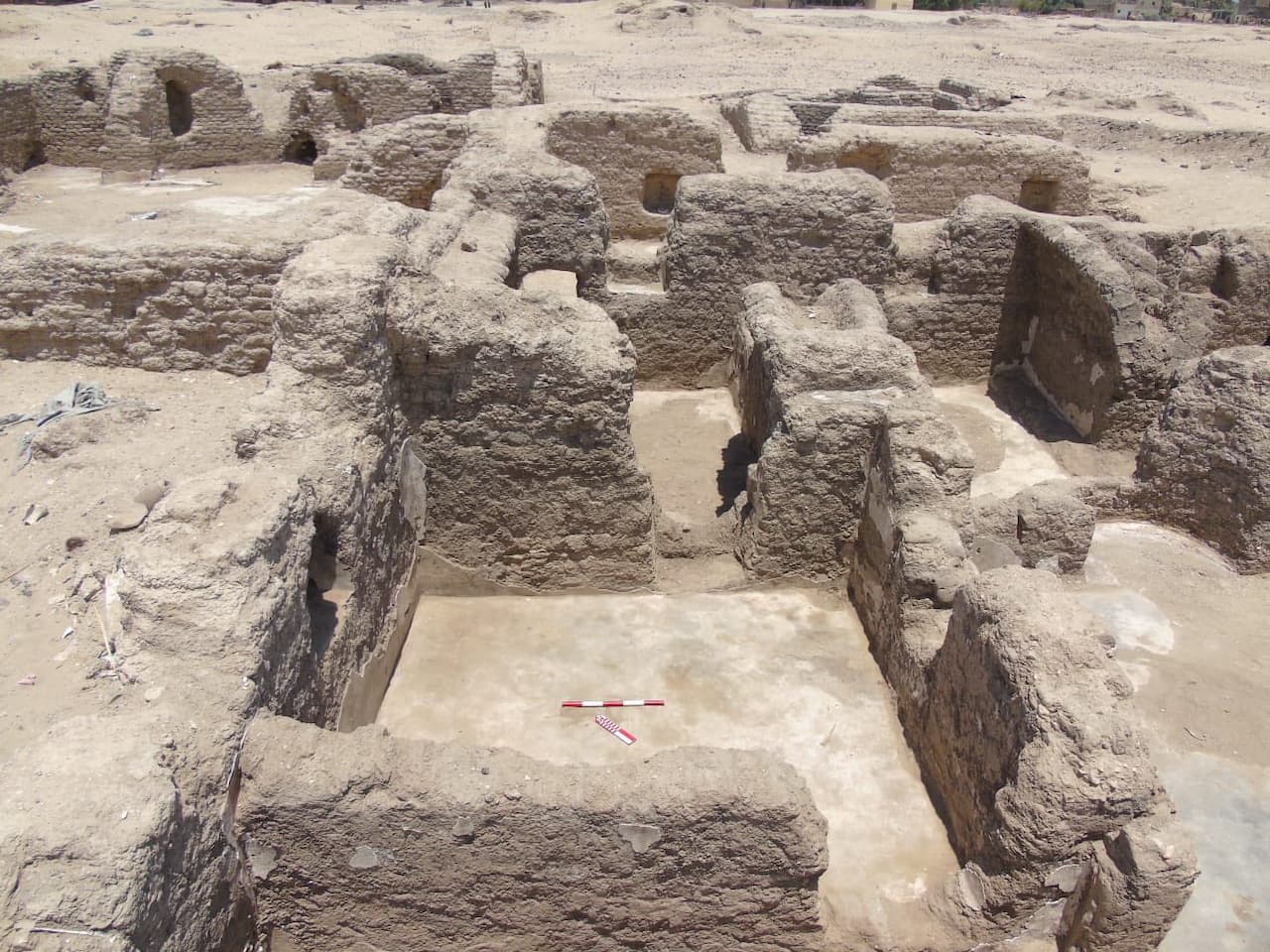
The discovery was made in the Dakhla Oasis in Egypt’s western New Valley province, an area already listed on UNESCO’s tentative heritage list. The excavation revealed extensive residential and religious structures, including a basilica-style church that appears to have served as the central religious and civic landmark of the settlement.
Researchers also uncovered a network of organized streets, with north-south thoroughfares intersecting east-west roads to form structured urban blocks, open squares, and public spaces. Archaeologists say this layout reflects a high level of planning and suggests a thriving and well-organized community.
According to officials from Egypt’s Ministry of Tourism and Antiquities, the site contains a range of architectural remains, including heavily fortified structures with thick defensive walls, residential homes with reception halls, and vaulted roofing systems. Two watchtowers were also discovered on the outskirts of the settlement, indicating that security and surveillance were important aspects of life in the ancient city.
Artifacts recovered from the site include coins, pottery fragments, and everyday tools, providing valuable insight into the economic and domestic activities of its inhabitants. Experts say these finds help reconstruct how people lived, traded, and interacted during a period when Egypt played a key role in the eastern Roman world.
In a separate discovery near Alexandria, archaeologists uncovered 18 ancient tombs at Marina el-Alamein. The burial sites include rock-cut and limestone tombs, along with pottery artifacts and a granite sarcophagus, further expanding understanding of ancient burial practices along Egypt’s Mediterranean coast.
Officials from the Supreme Council of Antiquities say the combined discoveries highlight Egypt’s rich and layered history, emphasizing both its urban sophistication and cultural diversity during antiquity. They added that ongoing excavations are expected to reveal even more details about the settlement’s structure and significance.
The findings are being hailed as a major archaeological breakthrough, offering a rare glimpse into a long-lost city that once stood at the crossroads of religion, trade, and regional governance in the Byzantine era.