







Beyond Earth’s Cradle: China Launches Pioneering Artificial Embryo Study in Space
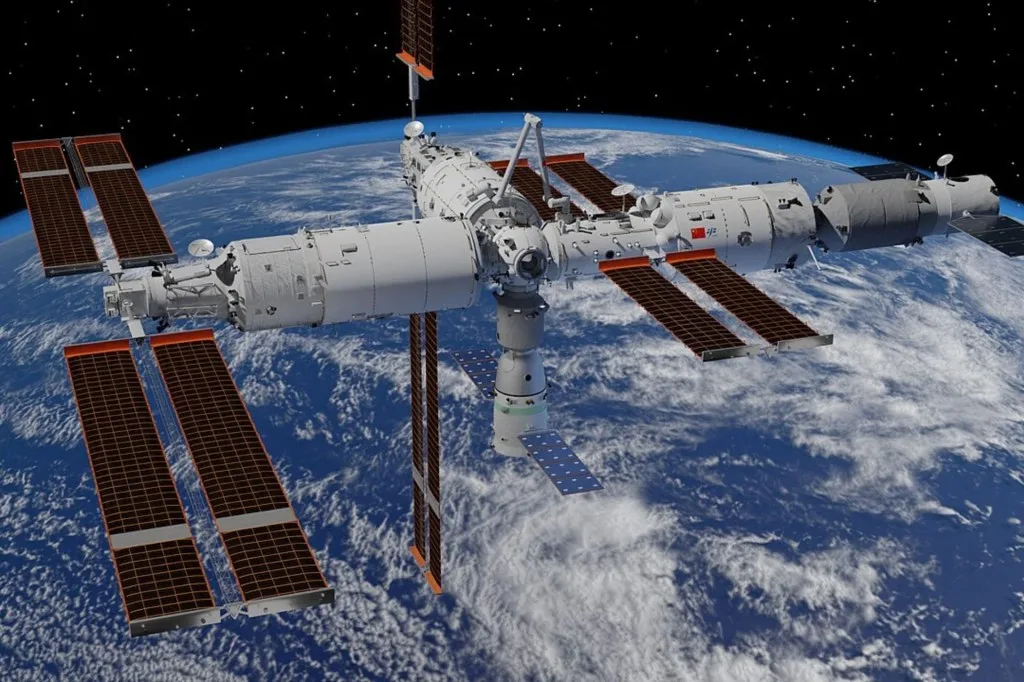
China has embarked on a groundbreaking scientific mission that could reshape our understanding of human development beyond Earth. Researchers have launched what is being described as the world’s first space-based experiment involving human artificial embryo models, sending samples to the country’s Tiangong space station for observation in a microgravity environment.
The ambitious project aims to investigate how early human developmental processes respond to conditions in space, offering valuable insights for the future of long-duration space exploration and potential human settlement beyond Earth. Scientists believe the findings could also advance medical research on Earth by improving understanding of embryonic development, cell behavior, and tissue formation.
Unlike natural human embryos, the samples used in the experiment are laboratory-created embryo models developed from stem cells. These structures mimic certain stages of early embryonic development but are not capable of developing into a human being. Their use allows researchers to study critical biological processes while avoiding many of the ethical concerns associated with traditional embryo research.
The experiment is being conducted aboard China’s Tiangong space station, which has become a major platform for advanced scientific research since becoming fully operational. The artificial embryo models were transported to orbit as part of a broader scientific mission focused on life sciences, biotechnology, and the effects of microgravity on living systems.
Scientists have long been interested in how space conditions affect human biology. Microgravity alters cell growth, gene expression, and tissue organization in ways that cannot be replicated on Earth. Understanding these changes is considered essential as space agencies around the world pursue plans for lunar bases, missions to Mars, and extended stays in orbit.
Researchers involved in the project hope to observe how cells communicate, organize, and differentiate in the absence of Earth’s gravity. The findings may help scientists identify challenges that future astronauts could face regarding reproduction, development, and long-term health during deep-space missions.
The study also has significant implications for regenerative medicine. By examining how stem-cell-derived structures behave in microgravity, researchers may gain new knowledge that could contribute to advances in tissue engineering, organ repair, and treatments for developmental disorders.
China’s space program has increasingly emphasized scientific innovation in recent years, using the Tiangong station to conduct experiments in physics, biology, medicine, and materials science. The artificial embryo project represents one of the most complex biological studies ever undertaken in orbit and highlights the country’s growing role in cutting-edge space research.
While the experiment is expected to generate valuable scientific data, it is also likely to spark discussion among ethicists, policymakers, and researchers regarding the future of developmental biology in space. Questions surrounding regulation, ethics, and the potential applications of such research will remain important as the field continues to evolve.
As humanity moves closer to becoming a multi-planetary species, studies like this one are helping scientists answer fundamental questions about life beyond Earth. The results from China’s pioneering experiment could provide crucial knowledge not only for future space missions but also for understanding the very beginnings of human development itself.