








Amazon Says Data Centres Used 9 Billion Litres of Water in 2025 as Cooling Demand Faces Scrutiny
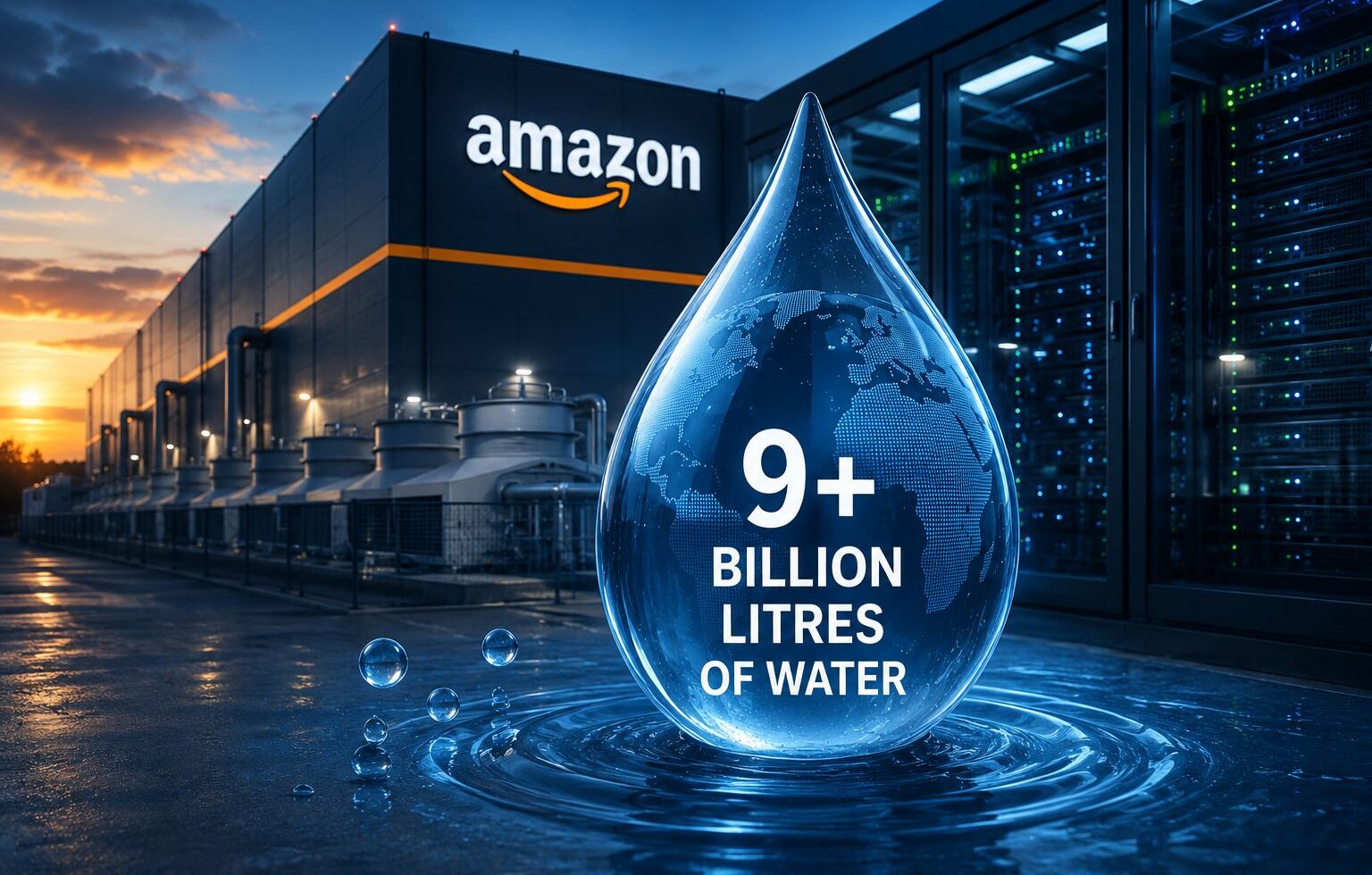
Amazon has reported that its global data centers used around 9 billion litres of water in 2025, with the majority of consumption attributed to cooling systems that help prevent servers from overheating. The company says the figure is slightly lower than the previous year and argues that its facilities are becoming more water-efficient compared to industry competitors.
Data centers are the backbone of modern digital services, powering everything from cloud computing and streaming to artificial intelligence and online retail operations. However, they generate significant heat due to the constant operation of high-performance servers. To manage this heat, many facilities rely on water-based cooling systems, which circulate and evaporate water to regulate temperatures and maintain performance.
Amazon says it has been investing heavily in improving the efficiency of its infrastructure, including advanced cooling technologies designed to reduce water consumption. These include systems that recycle water, improve airflow management, and use outside air cooling in suitable climates. The company claims these efforts have helped reduce overall water use per unit of computing power, even as global demand for cloud services continues to grow.
The reported 9 billion-litre usage highlights the growing environmental footprint of the digital economy, particularly as artificial intelligence and cloud computing expand rapidly. Industry analysts note that water usage in data centres has become an increasingly important issue, especially in regions already facing water stress or drought conditions.
Amazon also argues that its water efficiency performance compares favorably to some competitors, pointing to metrics such as water usage effectiveness, which measures how much water is consumed relative to computing output. According to the company, ongoing improvements in infrastructure design and location strategy are helping reduce the environmental impact of its operations over time.
However, the scale of water consumption has raised broader questions about sustainability in the tech industry. Environmental experts say that while companies are improving efficiency, the rapid growth of data-intensive technologies could offset these gains. The expansion of artificial intelligence models, in particular, is expected to increase demand for cooling resources in the coming years.
Communities near large data centre hubs have also expressed concern about local water resources, especially in areas where water supply is limited or already under pressure. This has led to calls for greater transparency from tech companies regarding water usage and stronger regulation of resource consumption.
Despite these concerns, Amazon maintains that it is committed to becoming “water positive” in the future, aiming to return more water to communities than it consumes through conservation projects, infrastructure improvements, and water replenishment programs.
As global demand for digital services continues to rise, the debate over the environmental cost of data infrastructure is likely to intensify. The reported 9 billion-litre figure underscores the scale of the challenge facing the tech industry as it tries to balance technological growth with environmental responsibility.