










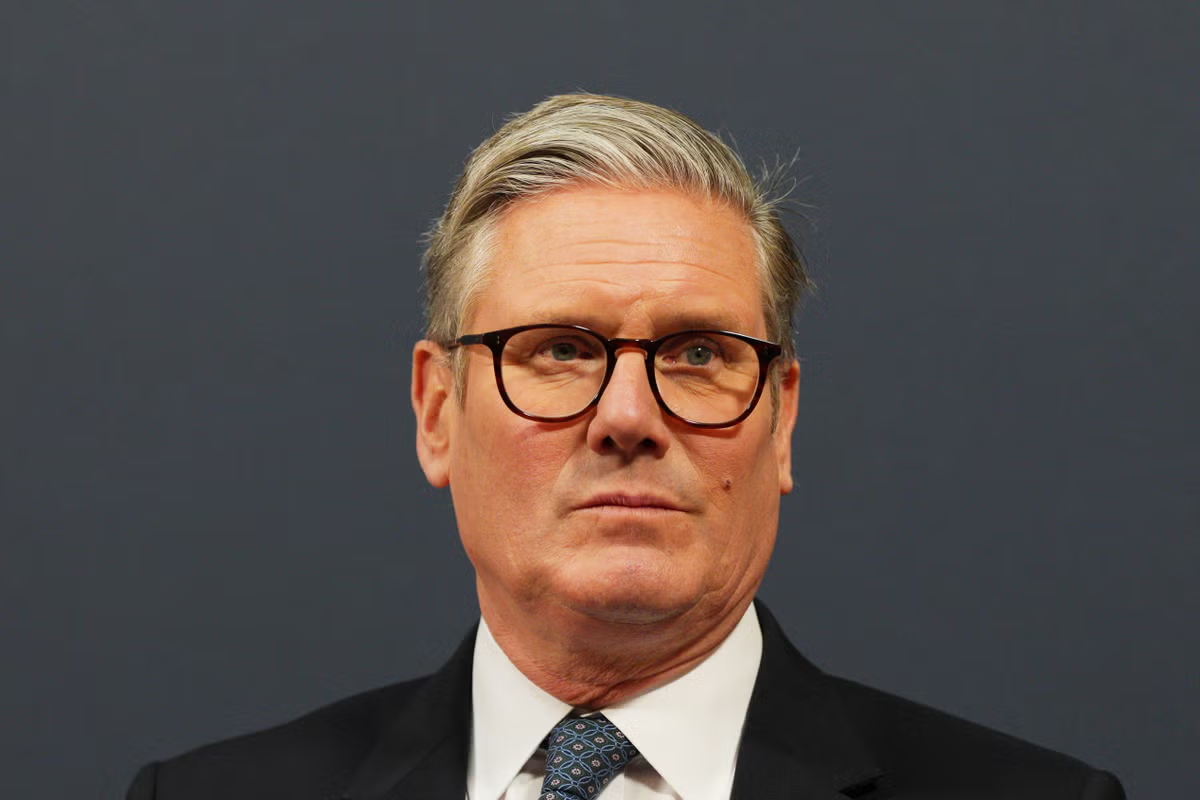
Starmergeddon: What Labour’s Struggles and the Rise of Populism Could Mean for the Future of UK Politics
British politics is entering a turbulent phase as the governing Labour Party faces growing pressure from both the left and the right, raising questions about stability, leadership, and the long-term direction of the country’s political system.
Under the leadership of Keir Starmer, Labour returned to power with promises of economic stability, public service reform, and political moderation. However, internal divisions, external criticism, and rising public frustration over cost-of-living pressures have created an increasingly difficult governing environment.
At the same time, political space is being squeezed by growing populist movements on both sides of the spectrum. On the left, more radical voices are pushing for faster and deeper structural changes to taxation, public ownership, and wealth redistribution. On the right, populist and nationalist groups are gaining traction by focusing on immigration, national identity, and dissatisfaction with established political institutions.
This dual pressure is creating what analysts describe as a “political squeeze,” where the ruling party is being challenged not only by the official opposition but also by smaller, more ideologically driven movements that are reshaping public debate.
The situation has raised concerns about long-term political fragmentation in the United Kingdom. Traditionally dominated by a two-party system, UK politics is now showing signs of greater volatility, with voters increasingly willing to shift support based on single issues rather than party loyalty.
Economic challenges, including inflation, housing pressures, and strained public services, have further intensified public dissatisfaction. Critics argue that these conditions create fertile ground for populist messaging, which often gains momentum during periods of economic uncertainty.
Despite these challenges, government officials maintain that reforms are underway and that stability remains the central goal of current policy. However, political observers warn that maintaining unity within the governing party while responding to competing pressures from both flanks will be a significant test of leadership.
In conclusion, the current phase of British politics reflects a broader global trend of political polarization and populist resurgence. Whether the Labour government can navigate these pressures will likely shape not only its own future but also the structure of UK politics for years to come.