





Satire, Social Media and India’s Gen Z Wave: How Digital Humor Is Reshaping Political Expression
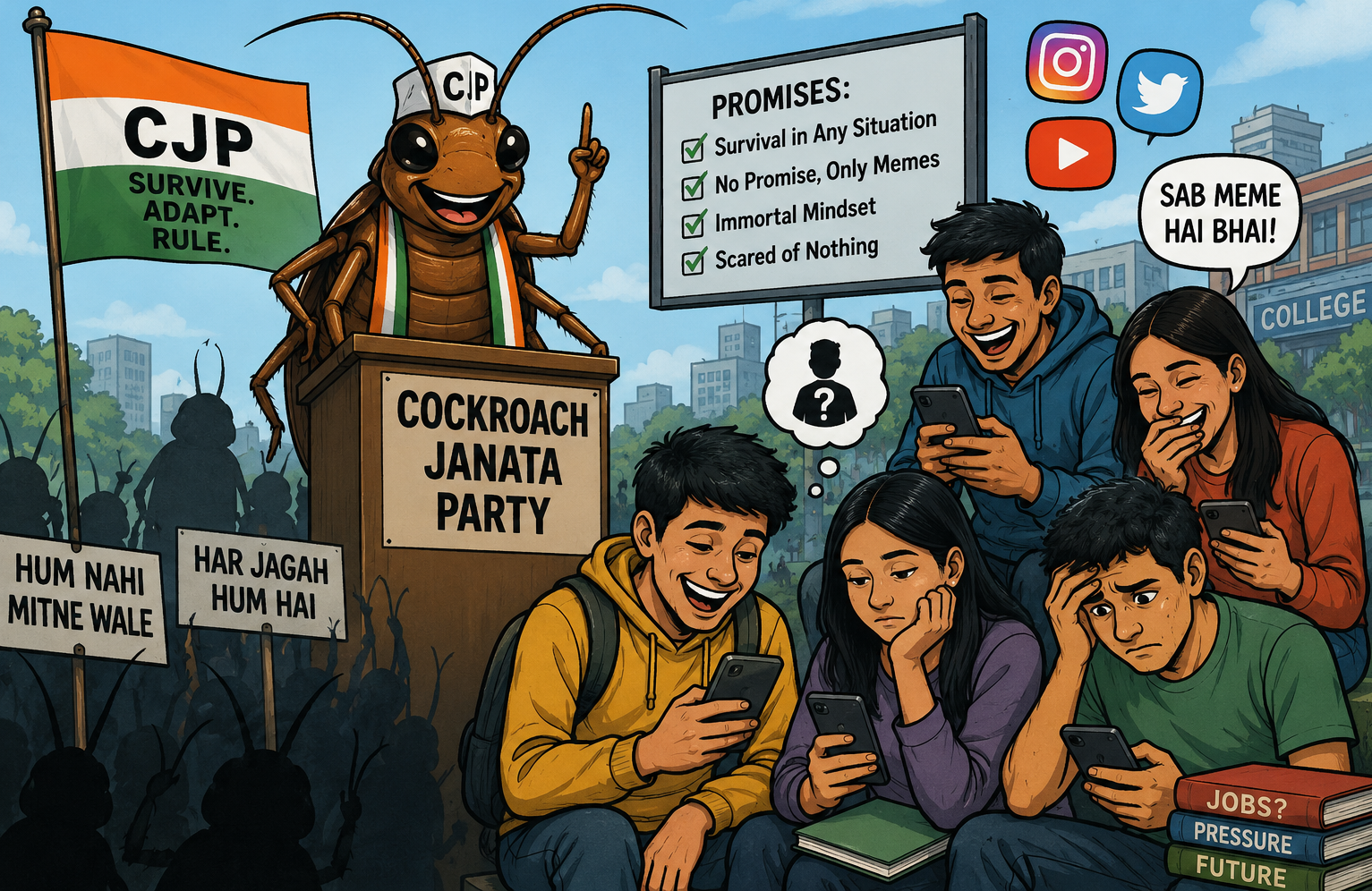
India’s political conversation is increasingly being shaped not only in traditional media and institutions but across Instagram reels, X threads, meme pages, and short-form satire content. A growing Gen Z-driven digital culture is turning humor into political commentary, and political commentary into viral entertainment.
At the heart of this shift is satire no longer limited to stand-up comedy or editorial cartoons, but embedded in everyday online content. Meme creators and digital storytellers use humor to comment on unemployment, inflation, education pressure, lifestyle inequality, and broader governance issues. These messages often spread faster than conventional news, influencing how young audiences interpret public policy and national debate.
Political analysts say this reflects a generational transformation. India’s Gen Z, raised in a fully digital environment, consumes politics in fragments rather than long-form narratives. Short videos, irony, and memes now function as a parallel political language, where emotion and relatability often matter more than formal messaging.
Supporters of the government argue that digital platforms have expanded freedom of expression and allowed young people to openly critique policies in ways that were not previously possible. They also highlight infrastructure growth, digital expansion, and economic reforms as key achievements during the same period.
However, critics and youth observers point out a growing disconnect between policymaking approaches and Gen Z expectations. Many argue that institutions have been slow to fully understand the priorities of younger citizens, particularly around job creation, mental health awareness, affordability of education, and work-life balance. This gap, they say, has contributed to frustration that increasingly finds expression through satire and online humor rather than formal political engagement.
Experts suggest that the issue is not simply disagreement over policy, but a difference in communication style and expectations. While governments tend to communicate through structured announcements and long-term planning, Gen Z responds to immediacy, transparency, and interactive dialogue. When these expectations are not met, digital satire often becomes the default outlet for commentary.
At the same time, the rapid spread of political humor raises concerns about misinformation, oversimplification of complex issues, and emotionally charged narratives shaped by algorithm-driven platforms. Satire can clarify issues—but it can also distort them when taken out of context or amplified without balance.
What is increasingly evident is that social media has fundamentally reshaped political participation in India. For Gen Z, memes and satire are not just entertainment they are tools of expression, critique, and identity-building in a rapidly changing society.
Whether viewed as a challenge or an evolution of democratic engagement, the rise of digital satire signals a new phase in Indian politics one where youth voices are louder, faster, and more decentralized than ever before.