


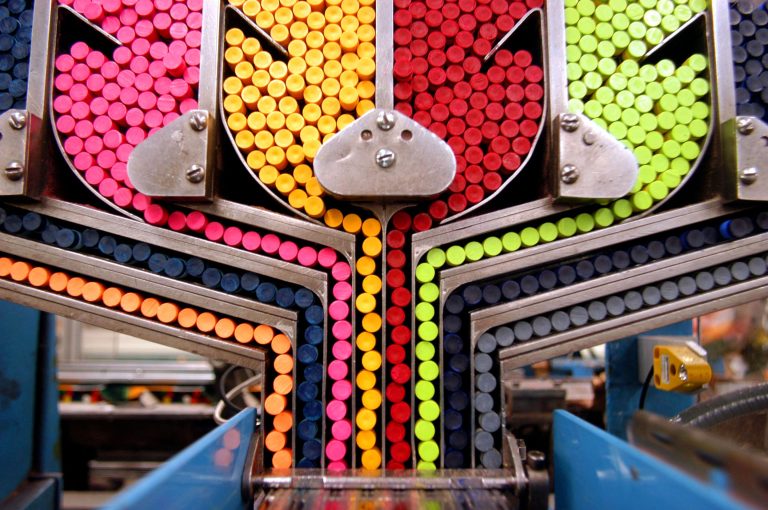
Crayola’s CEO Rejected the Offshoring Trend, Embraced Automation—and Now the Company Is Reaping the Long-Term Rewards
At a time when American companies were shifting manufacturing jobs overseas in droves, Crayola’s now-CEO Rich Wuerthele made a bold and unconventional choice. He bet on automation over offshoring—a move that’s now paying dividends in efficiency, stability, and brand reputation.
Instead of chasing short-term savings by outsourcing labor to low-cost countries, Crayola invested heavily in automation technologies, modernizing its domestic factories and creating a blueprint for resilient, homegrown manufacturing success.
Years later, as global supply chains face mounting challenges—from geopolitical disruptions to shipping delays—Crayola stands out not just as a nostalgic brand loved by generations, but as a forward-thinking manufacturing powerhouse.
When Everyone Else Was Leaving, Crayola Was Building
The 2000s and early 2010s saw a mass exodus of U.S. manufacturers. Companies across sectors—from consumer goods to electronics—relocated operations to China, Vietnam, and Mexico to cut costs. But at Crayola’s headquarters in Easton, Pennsylvania, leadership was taking a radically different approach.
Rich Wuerthele, who became CEO in 2020 after decades in various leadership roles, recognized a deeper opportunity. Rather than abandon American workers and face future volatility abroad, he chose to reinvent Crayola’s production model from within.
“Automation wasn’t just a cost-saving tool,” Wuerthele explained in a recent interview. “It was a way to future-proof our operations, empower our people, and stay closer to our values.”
Inside the Crayola Automation Transformation
Crayola’s automation journey began years before Wuerthele became CEO but accelerated under his watch. The company invested in state-of-the-art equipment, robotics, and artificial intelligence across its main manufacturing facility in Forks Township, PA.
What emerged was not a fully machine-run facility—but a hybrid workforce where humans and machines collaborate seamlessly. Robots now handle repetitive, labor-intensive tasks like packing, sorting, and crayon molding, while employees oversee operations, perform quality checks, and handle creative problem-solving.
This man-and-machine model has not only increased throughput and consistency—it’s created higher-skilled jobs, allowing Crayola to retrain and upskill existing workers instead of eliminating positions.
“We didn’t offshore—we upgraded,” Wuerthele emphasized. “Our goal was never to cut jobs, but to make our jobs better.”
A Pandemic-Proven Strategy
The COVID-19 pandemic became a real-world test of this strategy—and Crayola passed with flying colors.
While competitors struggled with supply chain breakdowns, labor shortages abroad, and port delays, Crayola kept its shelves stocked and its operations running. The company was able to quickly pivot production, implement safety protocols, and continue delivering its colorful products to kids, parents, and educators across the world.
Thanks to domestic automation, Wuerthele says, Crayola retained control of its supply chain, made faster decisions, and avoided many of the cost and delay traps that plagued global manufacturing during the pandemic.
“The resilience we built over the years through automation and local manufacturing gave us a real competitive edge,” he shared.
Why Rich Wuerthele’s Approach Is a Blueprint for Modern CEOs
Crayola’s success story under Wuerthele represents a broader shift in mindset for modern leadership. As more companies reconsider their reliance on overseas manufacturing, Crayola offers a tangible example of what re-shoring and reinvestment can look like.
Wuerthele’s leadership is guided by three core principles:
- Invest in People and Technology Equally
Automation is not just about machines. Crayola has spent years training staff, elevating roles, and ensuring that technology enhances—not replaces—human talent. - Keep Manufacturing Close to the Brand
Crayola’s crayons, markers, and creative tools are part of a deeply emotional brand story. Wuerthele believes producing them in the U.S. ensures consistency, quality, and a deeper connection with the company’s values. - Think Long-Term, Not Just Quarter to Quarter
Unlike offshoring, which offers immediate savings but long-term risk, Wuerthele’s strategy prioritizes durability and adaptability—two qualities that are now crucial in an unpredictable world.
The Real ROI: Efficiency, Control, and Consumer Trust
Crayola’s automation-first strategy didn’t just save jobs—it delivered serious results.
- Increased production output
- Reduced error and waste rates
- Faster product development cycles
- Improved environmental performance
- Enhanced worker safety and job satisfaction
And perhaps most importantly, it reinforced consumer trust. Parents and educators can still say, with pride, that Crayola products are made in America, by a company that values its workers and its customers.
Automation Is Not the End of Jobs—It’s the Future of Work
One of the key myths Crayola has debunked is that automation kills jobs. In reality, the company’s investment in technology has created better, more meaningful roles for its workforce. From technicians managing robotic systems to quality inspectors working with AI tools, Crayola employees are now part of a high-skill, high-tech ecosystem.
Wuerthele believes this is the model for the future—not just for Crayola, but for American manufacturing more broadly.
“The more we embrace innovation without leaving people behind, the stronger we become as a company—and as a country,” he said.
Final Thoughts: A Legacy of Color, Reinvented by Vision
Crayola has always been about imagination, creativity, and color. Under Rich Wuerthele’s leadership, it has also become a symbol of resilient, values-driven American manufacturing.
In choosing to automate rather than offshore, Wuerthele made a long-term investment in the company’s future, its people, and its promise. And as many brands now scramble to adapt to supply chain shocks and labor market shifts, Crayola is already several steps ahead—because it never strayed too far from home.
SEO Keywords for This Article:
Crayola CEO Rich Wuerthele, Crayola automation strategy, offshoring vs automation, American manufacturing success stories, made in USA brands, reshoring trends 2025, factory automation in the U.S., hybrid workforce automation, manufacturing during pandemic, Crayola Pennsylvania plant, Crayola leadership vision.