








Bangladesh Mourns as Former Prime Minister Khaleda Zia Dies at 80
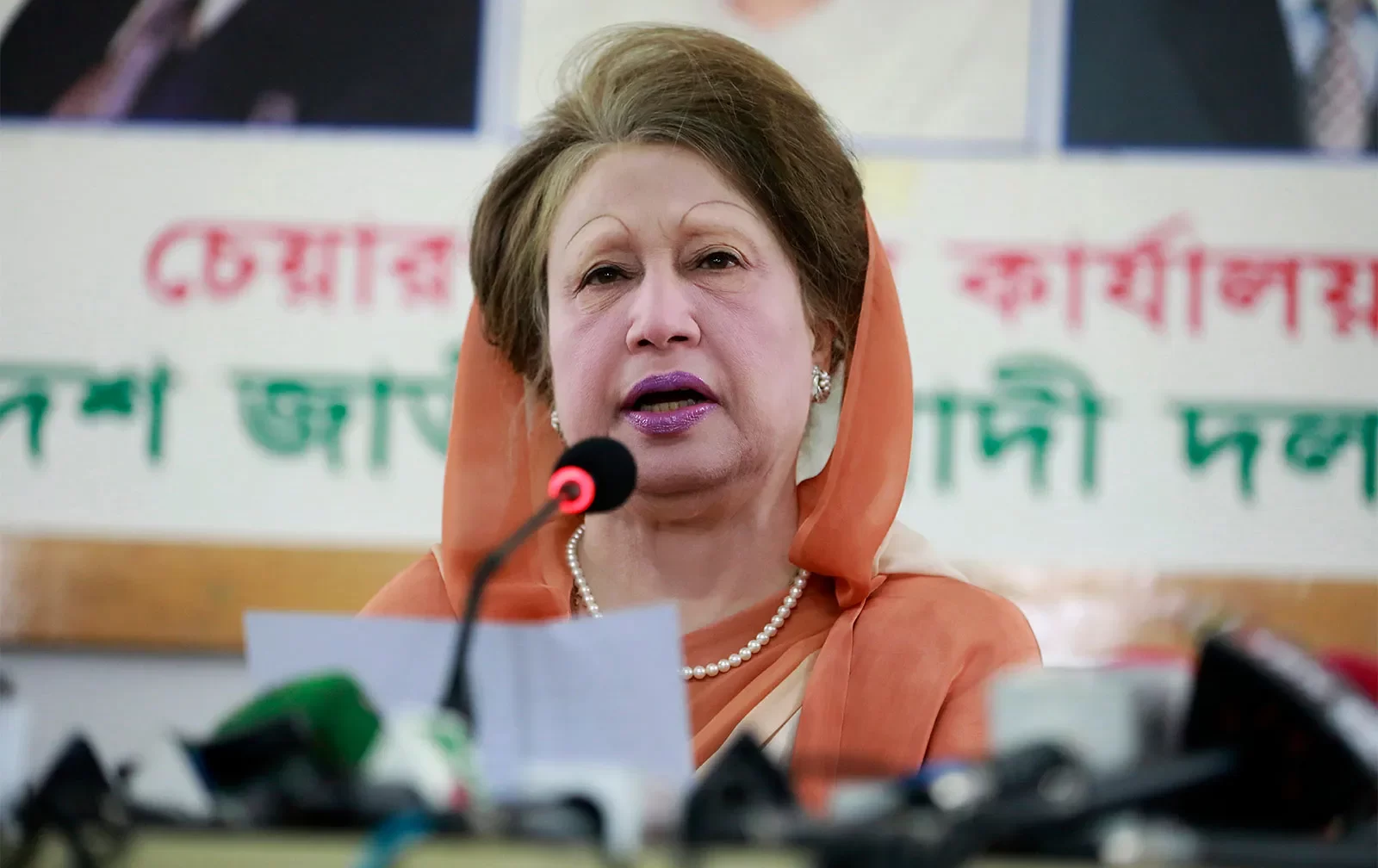
Bangladesh is in mourning following the death of Khaleda Zia, the country’s first female prime minister and a central figure in its modern political history. She passed away at the age of 80 after a prolonged illness, leaving behind a complex and lasting legacy that shaped decades of Bangladeshi politics. Zia had been hospitalized for several weeks due to multiple health issues, including advanced cirrhosis, diabetes, heart and chest problems, and arthritis. Her party, the Bangladesh Nationalist Party (BNP), confirmed her death early Tuesday morning.
Khaleda Zia rose to prominence after the assassination of her husband, President Ziaur Rahman, in 1981. She transformed personal tragedy into political resolve, gradually taking the helm of the BNP and becoming a driving force in restoring democratic governance after years of military rule. In 1991, she made history by becoming Bangladesh’s first female prime minister, a milestone that also positioned her as one of the earliest women to lead a government in a Muslim-majority nation. She served two terms in office, from 1991 to 1996 and again from 2001 to 2006, navigating Bangladesh through significant economic reforms, social development initiatives, and turbulent political challenges.
Her political career was marked by a long-standing rivalry with Sheikh Hasina, leader of the Awami League, which led to decades of alternating power and intense political confrontation. Zia’s tenure saw both accomplishments and controversies; she faced multiple corruption charges, which she and her supporters claimed were politically motivated attempts to weaken the opposition. In 2025, she and her son were acquitted of the final remaining corruption case, renewing hopes for her potential involvement in upcoming elections before her health declined.
As Bangladesh prepares for national elections in early 2026, Zia’s death leaves a leadership gap within the BNP. Her son, Tarique Rahman, now leads the party’s political activities and is expected to carry forward her legacy. Across the country, tributes have poured in from supporters and political allies, highlighting Zia’s role in shaping Bangladesh’s democratic journey and her impact as a pioneering woman in leadership.
Her passing marks the end of a defining political era, reflecting both the achievements and the controversies of a leader whose life was inseparably linked to the history of Bangladesh. The nation now remembers Khaleda Zia as a formidable political figure who changed the course of its modern politics while inspiring generations of leaders.