









Tarique Rahman Sworn In as Bangladesh Prime Minister After Landslide Election Victory
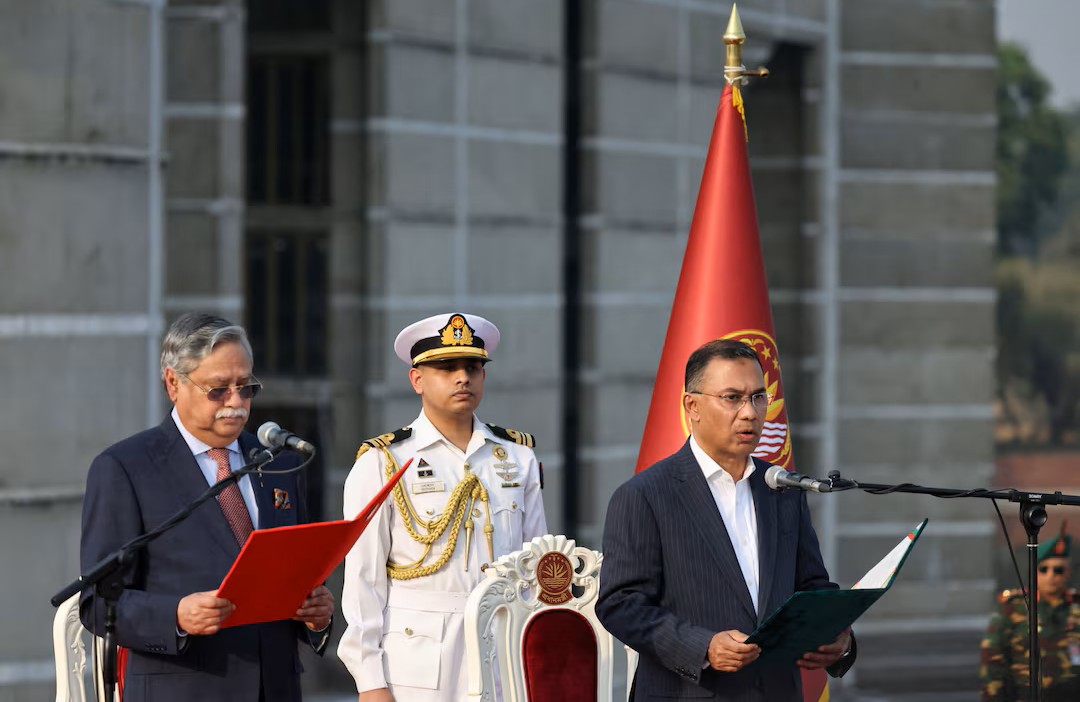
Tarique Rahman was sworn in as the prime minister of Bangladesh on Tuesday, following a decisive victory by his party in the recent parliamentary elections, signaling a major political shift in the country. The ceremony took place at the South Plaza of the Jatiya Sangsad Bhaban in Dhaka, with President Mohammed Shahabuddin administering the oath of office to Rahman and his cabinet members. Senior political leaders, diplomats, and representatives from neighboring countries attended the event.
Rahman, 60, leads the Bangladesh Nationalist Party, which secured a commanding two‑thirds majority in the elections held on February 12. His party’s return to power ends nearly two decades out of government and follows a period of political unrest that led to the departure of former prime minister Sheikh Hasina in 2024. An interim government oversaw the transition and elections.
As prime minister, Rahman faces challenges including restoring political stability, rebuilding investor confidence, and addressing economic issues such as reviving the garment sector, which is central to Bangladesh’s economy. Analysts note that while his party’s strong electoral mandate provides political leverage, managing deep political divisions and ensuring inclusive governance will be critical for long‑term stability.
The parliamentary landscape also changed significantly. The Islamist party Jamaat‑e‑Islami, participating in national polls after years of restrictions, won a number of seats and will serve as part of the opposition. The long‑dominant Awami League was barred from contesting after its registration was revoked by the Election Commission.
In his first address as prime minister, Rahman urged national unity, calling on citizens to maintain peace and law and order. He emphasized that his government would work to address the concerns of all Bangladeshis and pledged to strengthen democratic institutions and uphold the rule of law.
The international community has welcomed the political transition, with neighboring countries offering congratulations and stressing the importance of regional cooperation on security and economic development. Rahman’s rise to power marks a historic moment in Bangladesh’s political evolution as the country seeks stability and progress after years of upheaval.