










Ancient Egyptian Civilization: A Timeless Culture That Shaped Human History
Ancient Egyptian civilization is one of the most remarkable and long-lasting cultures in human history. It developed along the banks of the Nile River over 5,000 years ago and continued for thousands of years, leaving behind a legacy that still influences modern society. Known for its advanced architecture, complex religion, written language, and organized social structure, ancient Egypt remains one of the most studied civilizations in the world.
The foundation of Egyptian civilization was the Nile River. Unlike many ancient societies that struggled with unpredictable environments, Egypt benefited from the Nile’s regular flooding. Each year, the river deposited rich, fertile soil along its banks, making agriculture highly productive. This allowed Egyptian society to grow stable food supplies, support large populations, and develop strong cities. The Nile also served as a major transportation route, connecting different regions of the kingdom and enabling trade and communication.
Egyptian society was highly organized and structured. At the top was the Pharaoh, considered both a political ruler and a divine figure. Egyptians believed the Pharaoh was chosen by the gods to maintain order and harmony in the world. Below the Pharaoh were priests, government officials, soldiers, scribes, artisans, and farmers. Each group played an important role in maintaining the stability of the civilization.
Religion was deeply connected to every aspect of Egyptian life. The ancient Egyptians worshipped a wide range of gods and goddesses, each associated with natural forces or human activities. For example, Ra was the sun god, Isis was associated with motherhood and magic, and Osiris was linked to the afterlife. Egyptians strongly believed in life after death, which shaped their burial customs and led to the creation of elaborate tombs, including pyramids.
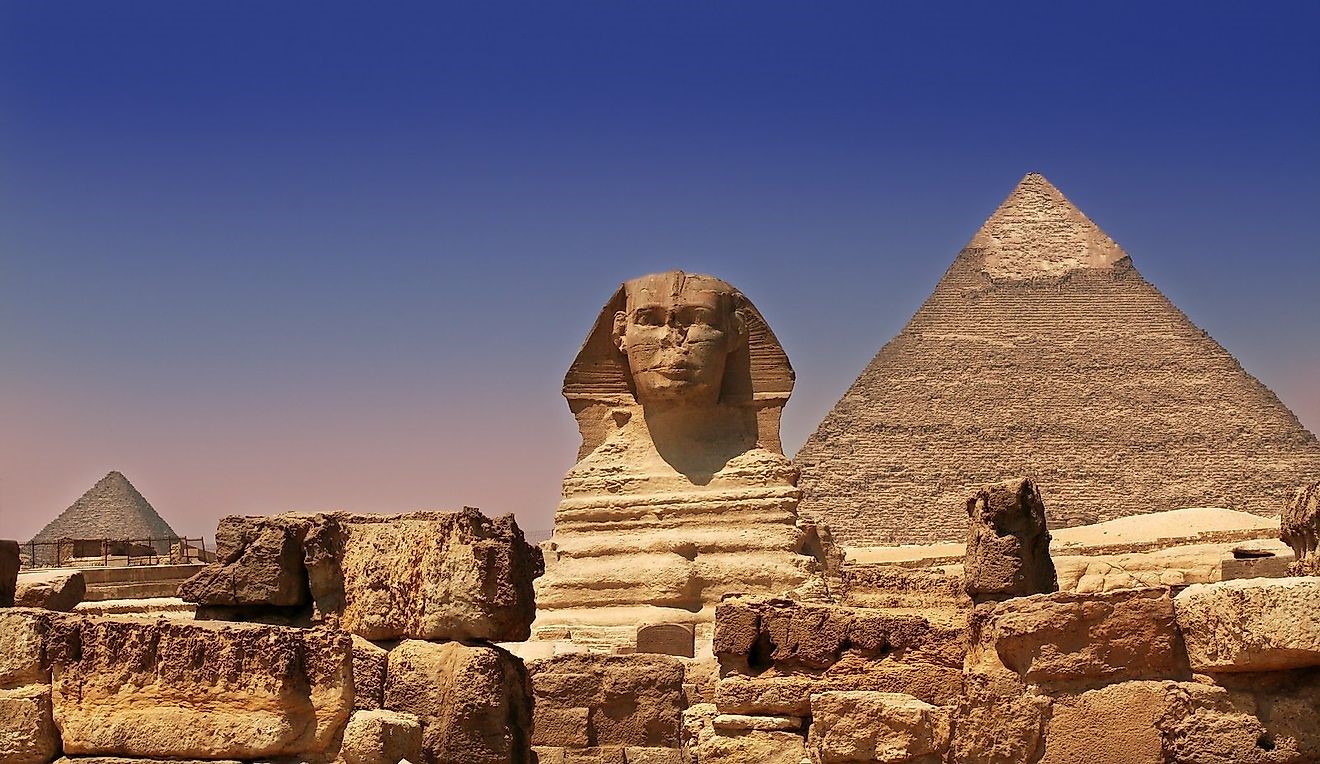
The pyramids of Egypt are among the most iconic architectural achievements in history. Built as tombs for Pharaohs, they were designed to protect the ruler’s body and possessions for the afterlife. The Great Pyramid of Giza, built for Pharaoh Khufu, is one of the Seven Wonders of the Ancient World and continues to amaze engineers and historians due to its precision and scale. These structures required advanced knowledge of mathematics, engineering, and organization, reflecting the sophistication of Egyptian society.
Another major achievement of ancient Egypt was its writing system, known as hieroglyphics. This system used symbols and images to represent sounds, words, and ideas. Hieroglyphics were carved on temple walls, tombs, and monuments, recording religious texts, historical events, and royal decrees. For centuries, the meaning of hieroglyphics was lost until the discovery of the Rosetta Stone allowed scholars to finally decode the ancient script.
Egyptians also made important contributions to science and knowledge. They developed advanced techniques in medicine, including early surgical practices and treatments for injuries and illnesses. Their understanding of anatomy was closely linked to mummification practices, which involved preserving bodies for the afterlife. In mathematics, they used geometry to construct buildings and measure land, especially after the annual floods of the Nile altered boundaries. They also observed the stars and developed calendars based on solar cycles to organize farming and religious festivals.
Art and culture were also highly developed in ancient Egypt. Paintings, sculptures, and carvings were created with strict rules and symbolic meanings. Art was not just decorative but also religious and functional, often used to guide the dead in the afterlife or honor the gods. Music, dance, and storytelling were also part of daily life, especially during religious festivals and royal celebrations.
Despite the rise and fall of many dynasties, foreign invasions, and eventual decline, ancient Egyptian culture remained remarkably consistent for thousands of years. Even after the civilization ended, its influence continued through Greek, Roman, and later modern cultures. Today, Egyptian monuments, artifacts, and writings provide valuable insight into how one of the world’s earliest advanced societies functioned.
Ancient Egypt stands as a powerful example of human innovation, organization, and creativity. Its achievements in architecture, science, religion, and culture continue to inspire curiosity and admiration, making it one of the most important civilizations in human history.