










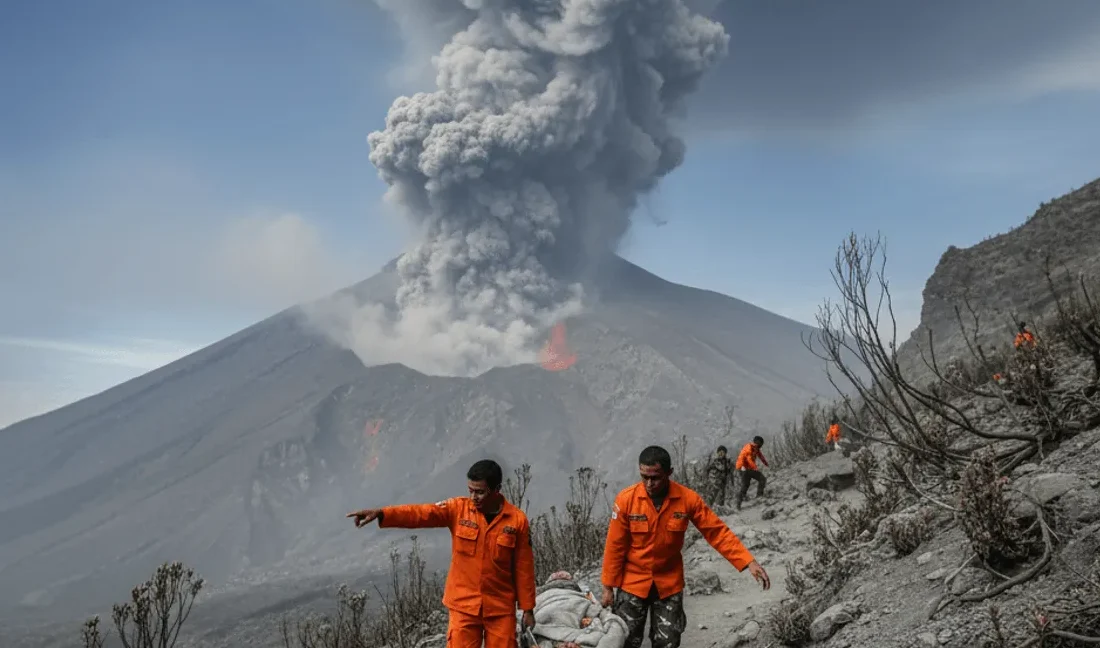
Three Dead After Volcano Erupts on Indonesian Island as Rescue Operations Continue
At least three people have died after a sudden volcanic eruption on Indonesia’s Mount Dukono, a highly active volcano located on the remote island of Halmahera, officials and local reports confirmed. The eruption triggered panic among hikers who were on the mountain at the time, with rescue teams still working to account for missing individuals in difficult and dangerous conditions.
The eruption occurred early in the morning, sending a massive ash column into the sky and forcing emergency evacuations. Authorities said the group of hikers had entered restricted zones despite repeated warnings about heightened volcanic activity in the area. Indonesia’s volcanology agency had already placed the volcano under an elevated alert status due to ongoing seismic activity.
According to initial reports, the eruption struck while dozens of climbers were near the summit. Several were able to descend safely, but others were caught in rapidly changing conditions caused by ash fall, toxic gases, and limited visibility. Emergency responders later confirmed that three hikers had died, while multiple others were injured and transported to nearby medical facilities for treatment.
Search and rescue teams, including police, military personnel, and disaster response units, have been deployed to the area. However, efforts have been repeatedly disrupted by continued volcanic activity, with additional eruptions and unstable terrain making access to the crater zone extremely hazardous.
Officials have warned residents and tourists to stay away from the volcano, emphasizing that the danger remains high. Indonesia sits on the Pacific “Ring of Fire,” a region known for frequent earthquakes and volcanic eruptions, making such incidents relatively common but often unpredictable in intensity.
Mount Dukono has a long history of eruptions, but recent activity has raised concerns among scientists monitoring increased pressure beneath the volcano. Authorities are continuing surveillance while urging strict compliance with exclusion zones designed to prevent further casualties.
As investigations continue, officials are also reviewing whether safety warnings were adequately followed and whether tour operators or individuals may have ignored restrictions that were in place prior to the eruption.
The tragedy highlights the risks of volcanic tourism in active zones, where sudden eruptions can occur with little warning, leaving even experienced climbers exposed to life-threatening conditions.