


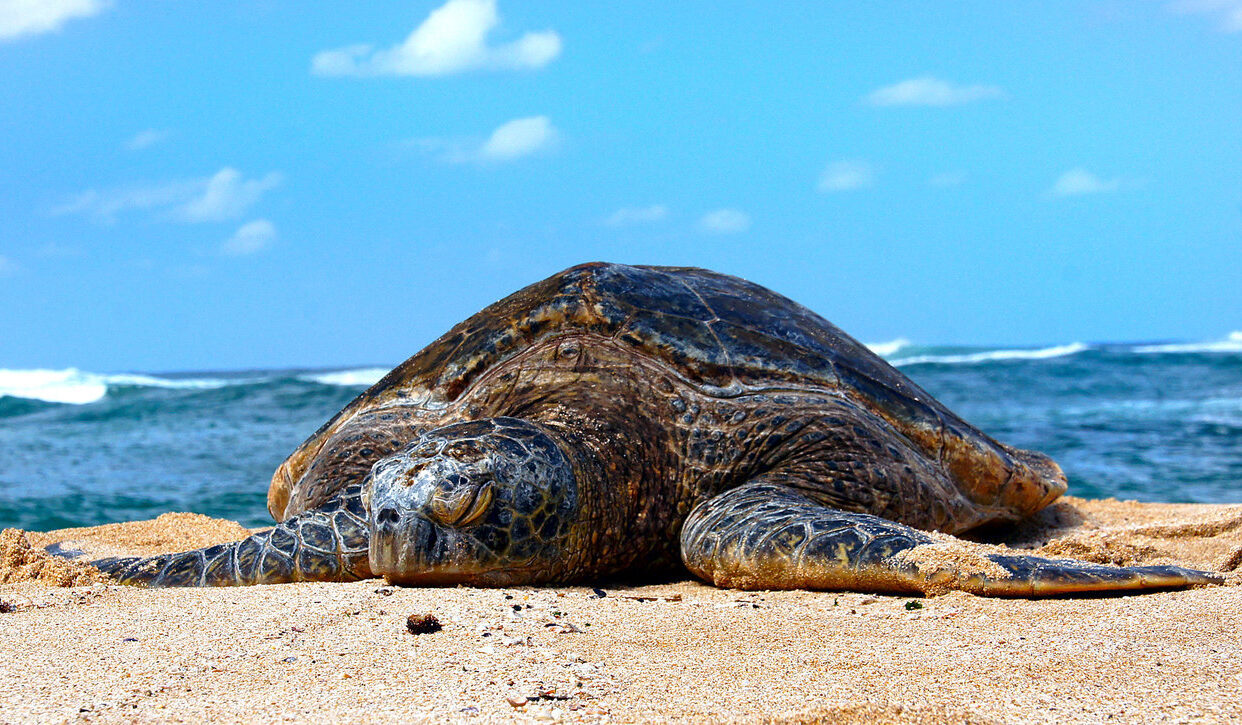







Sea Turtle Nesting on Japanese Island at Risk as Rising Temperatures Threaten Survival
A small island in southern Japan is facing growing concern over the future of its sea turtle population, as rising sand temperatures linked to climate change threaten to push nesting conditions beyond survivable limits.
On Kuroshima Island in Okinawa, researchers have observed a steady increase in beach sand temperatures over recent decades. Scientific estimates based on long-term data suggest that average sand temperatures have risen by approximately 1.3°C over the past 100 years, a change that is proving critical for species that rely on precise thermal conditions for reproduction.
Sea turtles are particularly sensitive to temperature during incubation. The warmth of the sand not only determines whether eggs will hatch successfully but also influences the sex of hatchlings. Warmer sand tends to produce a higher proportion of female hatchlings, and extreme heat can reduce hatching success altogether. Conservation experts warn that continued warming could eventually make parts of Kuroshima Island unsuitable for nesting.
Several species of sea turtles that depend on these beaches for reproduction are now considered at risk, as rising temperatures narrow the window of safe nesting conditions. Scientists studying the area have reported that peak summer sand temperatures are approaching levels that may exceed the tolerance range for successful egg incubation in some species.
Local conservation groups and researchers are monitoring nesting sites more closely, collecting data on hatch rates and experimenting with mitigation measures such as shading nesting areas and relocating vulnerable eggs to controlled environments. These efforts aim to preserve populations while longer-term climate solutions are addressed.
Japan’s coastal ecosystems are already experiencing the effects of warming seas and changing weather patterns, with impacts extending beyond turtles to coral reefs, fish populations, and coastal biodiversity. Experts say that the situation on Kuroshima Island reflects a broader global trend in which rising temperatures are disrupting delicate ecological balances.
While sea turtles have survived for millions of years, conservationists warn that the current rate of climate change presents unprecedented challenges. Without intervention, they caution that some nesting sites may become unusable within decades, putting long-term survival of local populations under serious threat.
For now, researchers continue to track conditions on Kuroshima Island closely, hoping that targeted conservation efforts can help preserve one of Japan’s most important sea turtle nesting habitats.